What Kind of Roof Damage Is Covered by Insurance? The Complete 2026 Guide
Key Takeaways
- Covered: wind, hail, fire, lightning, falling trees/limbs, weight of snow/ice, vandalism, and impact events.
- Not covered: age, wear and tear, neglect, gradual leaks, defects, pests, and flood (needs separate flood insurance).
- Cause beats appearance. Two identical-looking leaks can be covered or denied depending on what caused them.
- Wind is #1 on Long Island. Coastal storms make wind and falling-tree claims the most common covered roof losses here.
- Documentation decides borderline claims. A licensed contractor inspection is what separates covered storm damage from "wear and tear."
When a storm rolls off the Atlantic and you spot missing shingles or a ceiling stain, the first practical question is: will my policy pay for this? Homeowners insurance covers a surprisingly wide range of roof damage — but only when the right kind of event causes it. This guide lays out exactly what kind of roof damage is covered by insurance, what's excluded and why, and how insurers decide the difference, all from the perspective of a Long Island roofing contractor who works these claims every week.
The Golden Rule: Covered Perils vs. Excluded Causes
Every homeowners policy works the same way at its core. It lists — or broadly describes — a set of covered perils, which are sudden and accidental events. If one of those events damages your roof, you have a claim. Everything else, especially the slow and predictable decline that comes from age and weather exposure, is your responsibility as the homeowner. Insurance is designed to protect you from the unexpected, not to replace building components at the end of their natural life.
On the two dominant policy forms in New York — the HO-3 (open perils for the structure) and HO-5 (the broadest common form) — your roof is insured against everything except what the policy specifically excludes. That's why understanding the exclusions matters just as much as knowing the covered perils. Let's go through both in detail.
Roof Damage That Insurance Typically Covers
Wind and windstorm damage
Wind is the single most common covered roof claim on Long Island. When a nor'easter, thunderstorm, or tropical system lifts, creases, or tears off shingles, the damage — and the interior water damage that follows — is covered, subject to your deductible. Because our region takes the brunt of coastal storms, this is the claim we see more than any other. (We cover it in depth in our guide to whether insurance covers wind damage to your roof.)
Hail damage
Hail bruises and fractures shingles, knocking off the protective granules and shortening the roof's life. While Long Island sees less hail than the Midwest, it does occur, and hail damage is a covered peril. It often requires professional documentation because the damage can be subtle to an untrained eye.
Falling trees, limbs, and objects
A tree or large branch crashing onto your roof is one of the clearest-cut covered claims there is — whether the tree was on your property or a neighbor's. The dwelling portion of your policy pays for the roof and structural repairs, and removal of the tree is usually covered up to a limit when it strikes a covered structure.
Fire and lightning
Fire and lightning strikes are covered perils on every standard policy. Damage to the roof structure and decking from fire, and from a lightning strike, falls under your dwelling coverage.
Weight of ice and snow
When accumulated snow or ice load stresses or collapses part of a roof structure, many policies cover the resulting damage. Related ice-dam water intrusion is often covered as well, though it varies by policy — always verify your specific terms.
Vandalism, vehicle, and aircraft impact
Less common but still covered: intentional vandalism to your roof, and impact from a vehicle or aircraft (or objects falling from them). These sudden, accidental events fit squarely within covered perils.
| Cause of Roof Damage | Typically Covered? | Notes |
|---|---|---|
| Wind / windstorm | ✅ Yes | Most common covered claim on Long Island |
| Hail | ✅ Yes | May need professional documentation |
| Falling tree / limb | ✅ Yes | Clearest-cut claim; removal often covered too |
| Fire / lightning | ✅ Yes | Covered under dwelling protection |
| Weight of ice / snow | ✅ Usually | Structural load damage; verify policy |
| Vandalism | ✅ Yes | Intentional damage by others |
| Vehicle / aircraft impact | ✅ Yes | Sudden accidental impact |
| Wind-driven rain (after breach) | ✅ Usually | Covered when wind first opened the roof |
| Age / end of service life | ❌ No | Not a covered peril |
| Wear and tear | ❌ No | Homeowner maintenance responsibility |
| Neglect / poor maintenance | ❌ No | Can void otherwise-valid claims |
| Gradual / long-term leaks | ❌ No | Not sudden or accidental |
| Manufacturing / installation defect | ❌ No | Usually a warranty matter |
| Pests / rodents / insects | ❌ No | Excluded on standard policies |
| Flood / rising water | ❌ No | Requires separate flood insurance |
Roof Damage That Insurance Does NOT Cover
Understanding exclusions saves you the frustration of a denied claim. Here's what your policy will not pay for, and why.
Age and normal wear and tear
This is the big one. Roofs have a finite lifespan — asphalt shingles typically last 15–30 years on Long Island — and when they reach the end of it, replacing them is a maintenance expense, not an insurable loss. Curling, cracking, granule loss, and slow leaks from an aging roof are all excluded.
Neglect and poor maintenance
If damage results from a problem you could and should have addressed — missing shingles you never replaced, clogged gutters, failed flashing you ignored — insurers can deny the claim. Worse, documented neglect can jeopardize otherwise-valid claims on the same roof.
Gradual leaks and long-term water damage
Damage that developed slowly over months or years is not "sudden and accidental," so it's excluded. This is why a leak discovered late, after long-term staining and rot, is often denied even if a storm gets the blame.
Manufacturing and installation defects
If shingles fail because of a factory defect or bad installation, that's a manufacturer or contractor warranty issue — not an insurance claim.
Pests and vermin
Damage from squirrels, raccoons, birds, or insects is excluded on standard policies.
Flooding
Standard homeowners insurance never covers flood damage from rising water or storm surge — that requires a separate NFIP or private flood policy. On Long Island, this distinction is critical during hurricanes, when a home can suffer both covered wind damage and uncovered flood damage in the same storm.
How Insurers Actually Decide What's Covered
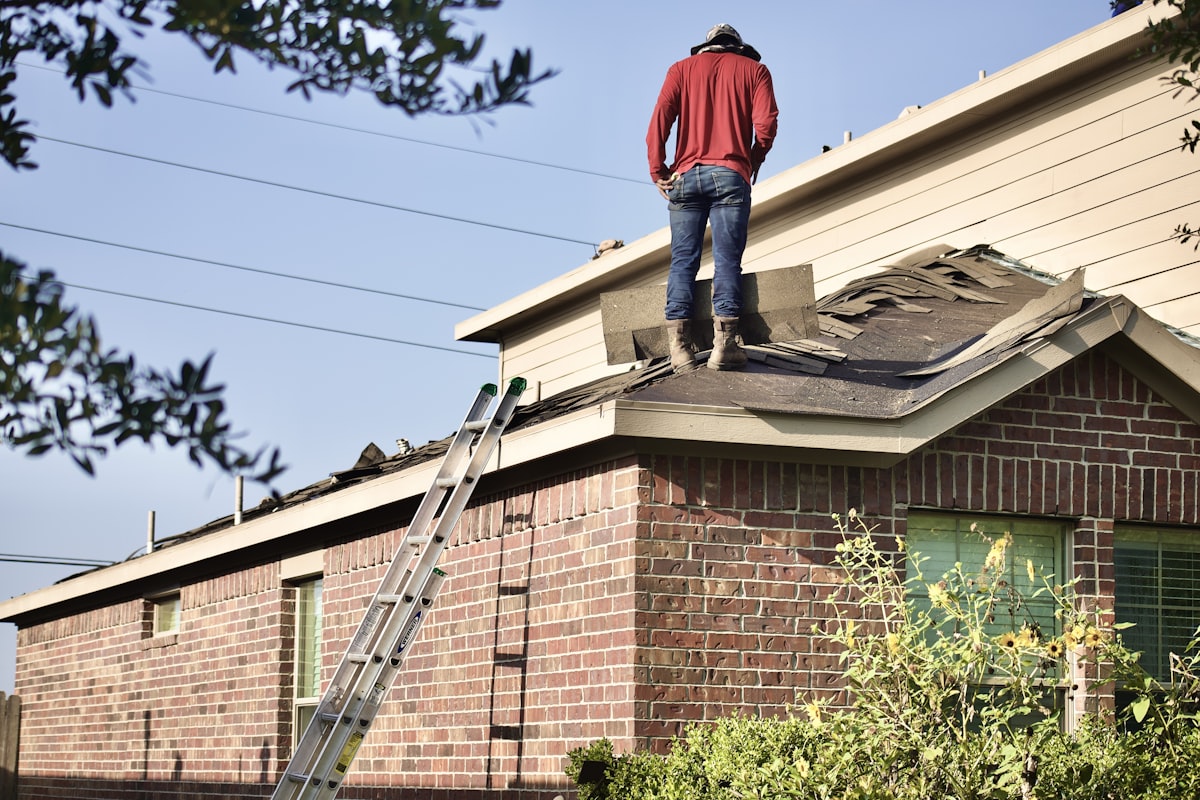
When you file, the insurer sends an adjuster whose job is to determine the cause and extent of the damage. They look for telltale signs: fresh, clean breaks and creasing point to a recent wind event; uniform curling and heavy granule loss point to age. They'll consider the roof's estimated age, its overall condition, the reported storm date, and local weather records for that date.
This is exactly where an independent contractor inspection changes outcomes. Adjusters are trained to protect the insurer's bottom line, and borderline damage is often classified in the insurer's favor. A licensed roofer inspecting on your behalf documents the damage the way it needs to be seen — distinguishing storm damage from wear, catching damage the adjuster overlooked, and providing accurate Long Island repair pricing. On split-decision claims, that documentation is frequently the difference between approval and denial.
Not sure if your roof damage is covered? Get a free, honest inspection and a claim-ready damage report — all of Long Island, Nassau & Suffolk County.
📞 (631) 532-7346Request Online Estimate →
Real Long Island Claim Scenarios
Abstract rules are easier to apply with concrete examples. Here are four situations we see regularly across Nassau and Suffolk County, and how coverage typically shakes out.
Scenario 1 — Nor'easter strips shingles (Covered). A February nor'easter tears two dozen shingles off the windward slope of a 9-year-old roof, and water stains appear on the bedroom ceiling. Cause is a dated wind event, the roof was in good condition, and the damage is sudden. This is a textbook covered claim: the roofing repair and the interior ceiling damage are both paid, minus the deductible.
Scenario 2 — Slow leak from a 24-year-old roof (Not covered). A homeowner notices a long-standing brown stain and discovers the shingles are brittle and curling. There's no storm tied to it. The insurer classifies this as age and wear — a maintenance expense the homeowner must cover out of pocket.
Scenario 3 — Oak limb punctures the roof in a summer storm (Covered). A large branch falls during a thunderstorm and punches through the decking. The dwelling coverage pays for structural and roof repair, and removal of the limb from the structure is typically covered up to a limit. One of the clearest approvals there is.
Scenario 4 — Hurricane brings wind and flooding (Split). Wind removes shingles (covered by homeowners) while storm surge floods the first floor (covered only by a separate flood policy). The same storm produces one covered claim and one that depends entirely on whether the homeowner carries flood insurance — a common and costly surprise on Long Island's South Shore.
Does Insurance Cover Roof Repair or a Full Replacement?
Coverage decides whether you're paid; the scope of damage decides whether the insurer funds a repair or a full replacement. Insurers naturally prefer the cheaper repair, so they'll often approve a spot fix when they can. A full replacement is warranted — and defensible — when the damage spans multiple slopes, when repeated covered claims have compromised the roof, or when the damaged shingles are discontinued and can't be matched to the existing ones. New York's matching considerations can support replacement when a repair would leave a mismatched, patchwork roof. This is another area where a licensed contractor's documentation is decisive: proving that a reasonable repair isn't possible is what converts a repair approval into a covered replacement.
ACV vs. RCV: How Much of the Covered Damage You Recover
Even when your damage is covered, how much you receive depends on your valuation type. Replacement Cost Value (RCV) pays the full cost to replace the damaged roofing at today's prices, minus your deductible. Actual Cash Value (ACV) pays only the depreciated value, so an older roof yields a smaller check and a bigger out-of-pocket gap. Increasingly, insurers place older roofs on ACV settlement automatically. Check your declarations page so you know which applies before you file — it dramatically changes the math on any covered claim.
Whose Insurance Pays When a Neighbor's Tree Hits Your Roof?
This one confuses almost everyone. If your neighbor's tree falls on your roof, it's generally your homeowners insurance that pays for the damage to your home — not your neighbor's. That feels backward, but it's how the system works: your policy covers your dwelling regardless of where the tree grew. The main exception is negligence. If you can show the tree was already dead or clearly hazardous and your neighbor was warned and did nothing, your insurer may pursue your neighbor's policy through a process called subrogation to recover the payout (and your deductible). In practice, file with your own carrier first to get repairs moving; the insurers sort out responsibility afterward. The same principle applies in reverse when your tree damages a neighbor's home.
Long Island–Specific Coverage Notes
A few realities shape roof claims specifically in Nassau and Suffolk County. Many coastal policies carry a separate windstorm or hurricane deductible — a percentage of your home's insured value rather than a flat dollar amount — which can be substantial. Some carriers also impose roof-age limits, refusing new policies or wind/hail coverage on roofs past a certain age. And because hurricanes here combine wind and flooding, homeowners frequently need both homeowners and flood coverage to be fully protected. Knowing these local nuances before a storm hits is the best way to avoid an unpleasant surprise during a claim.
What to Do the Moment You Discover Roof Damage
Regardless of the cause, your first moves determine how smoothly a claim goes. Prevent further damage (emergency tarping — keep receipts), photograph and date everything inside and out, get a professional inspection before the adjuster arrives, review your policy's deductible and valuation type, and file promptly. Delay is the number-one reason coverable claims get reduced or denied. Greene Group provides free storm-damage inspections and detailed reports across Long Island to give your claim its strongest footing from day one.
Frequently Asked Questions
What kind of roof damage is covered by insurance?
Sudden, accidental damage from named perils: wind, hail, fire, lightning, falling trees and objects, the weight of ice or snow, vandalism, and vehicle or aircraft impact. The resulting interior water damage is generally covered too.
What roof damage is not covered by insurance?
Damage from age, wear and tear, neglect, gradual leaks, manufacturing or installation defects, pests, and flooding. These are maintenance responsibilities or require a separate policy such as flood insurance.
Does insurance cover a roof leak?
Only if a covered peril caused it. A leak from wind-lifted shingles or a fallen tree is usually covered; a leak from old, worn shingles is treated as wear and tear and denied.
Is roof damage from age ever covered?
No. Age is never a covered peril. Insurance responds to events, not to a roof reaching the end of its service life.
Does homeowners insurance cover a tree falling on the roof?
Yes — it's one of the clearest covered claims, whether the tree was yours or a neighbor's. Structural repairs and often tree removal are covered.
How does the insurer decide if my damage is covered?
An adjuster determines the cause. A sudden covered peril on a reasonably maintained roof is covered minus your deductible; age, wear, or neglect is denied. Independent contractor documentation heavily influences the outcome.
This article is general information for Long Island homeowners and is not legal, financial, or insurance advice. Coverage depends on the specific terms of your policy. Review your declarations page and speak with your insurer or a licensed professional about your situation.