Bathroom Remodel Cost on Long Island
Quick Answer
A bathroom remodel on Long Island typically runs $12,000 to $25,000 for a surface refresh, $25,000 to $50,000 for a midrange full remodel, and $50,000 to $85,000 for a gut renovation. Zonda's 2025 Cost vs. Value data puts the New York metro midrange bath remodel at $30,376. Plan on 17 to 23 working days without that bathroom on a full remodel; a surface refresh is 5 to 8.
Key Takeaways
- Five tiers, $12,000 to $140,000+ — triangulated from Zonda's New York metro data and the published tiers of Long Island bathroom contractors, not invented.
- Zonda's New York metro midrange bath remodel is $30,376 and recoups 76.5%. It is a New York metro figure, not a Long Island one, and we will not relabel it.
- Angi's $12,142 is national and sits about 60% below Zonda — methodology plus a metro premium. Angi's own full-remodel band of $25,000 to $80,000 brackets the Zonda number.
- Labor is the largest single line, plausibly 50–65% of the budget. Bathrooms are labor-heavier than kitchens because plumbing and waterproofing are dense in a small footprint.
- You lose the room for roughly 17–23 working days. Nobody publishes that figure. We derive it below and show the arithmetic.
- Imported vanities carry a 25% Section 232 tariff, with the increase to 50% deferred to January 1, 2027. That is the one real deadline on this page.
What Does a Bathroom Remodel Cost on Long Island in 2026?
Here is the sourcing frame before the numbers, because the frame is the point. These ranges are triangulated from Zonda's 2025 Cost vs. Value data for the New York metro market and the published tiers of Long Island bathroom contractors. They are planning ranges, not a quote. They are not presented as an average, because an average of five very different projects is not a useful planning number.
The tier you land in is set by what moves, not by what the finishes look like. A homeowner can spend $18,000 on good tile and a good vanity in a bathroom where nothing changes position, and $60,000 in the identical room because the toilet moved four feet. The finishes are visible and the plumbing is not, which is why the finishes get the attention and the plumbing decides the budget.
| Tier |
Planning Range |
What It Is |
Timeline |
Days Without That Bathroom |
| Surface refresh |
$12,000 – $25,000 |
Fixtures, vanity, paint, re-tile in place. Nothing moves. |
1–2 weeks |
5–8 working days |
| Midrange full remodel |
$25,000 – $50,000 |
Everything replaced, layout essentially unchanged. Zonda's New York metro midrange figure of $30,376 sits inside this band. |
3–5 weeks |
15–20 working days |
| Major / gut renovation |
$50,000 – $85,000 |
Down to studs and subfloor. Layout changes, plumbing moves, hidden conditions surface. |
5–8 weeks |
20–28 working days |
| Upscale |
$85,000 – $140,000 |
Stone, custom glass, radiant floor, high-end fixtures. Zonda's New York metro upscale figure of $90,686 sits inside this band. |
8–12 weeks |
25–35 working days |
| High-end custom / East End |
$140,000+ |
Fully bespoke. |
12+ weeks |
Varies |
Planning ranges as of July 2026, triangulated from Zonda's 2025 Cost vs. Value data for the New York metro market and the published tiers of Long Island bathroom contractors. Not a quote and not a published index. Hidden conditions, permit fees and fixture selections move these numbers.
Two things worth reading off that table. The timeline column and the downtime column are not the same number, and most cost pages publish only the first; we work that through further down. And the bands overlap at the edges on purpose. A high-end midrange job and a modest gut job land in the same money: one is a better room in the same shape, the other is a different room.
How Much Does It Cost to Add a Bathroom on Long Island?
Adding a bathroom is a construction job, not a bathroom job. There is framing, sometimes structure, a plumbing rough-in that has to reach a stack and a vent, an electrical circuit that has to come from somewhere, and in Suffolk County a wastewater question that can gate the project before a wall goes up. Our Long Island bathroom addition guide works through those variables one at a time, including basement bathrooms that need an ejector pump to reach the drain line.
| Scope |
Planning Range |
Timeline |
| Half bath inside the existing footprint |
$25,000 – $45,000 |
4–6 weeks |
Full bath inside the existing footprint
(basement, closet or spare-room conversion) |
$40,000 – $75,000 |
6–10 weeks |
| Full bath adding square footage |
$70,000 – $130,000+ |
10–16 weeks |
Same sourcing frame as the renovation tiers. Zonda's New York metro reference points for additions are $70,419 midrange and $126,509 upscale.
Those Zonda reference points are useful because they bracket the two lower rows. A midrange bathroom addition in the New York metro market carries a $70,419 job cost in Zonda's 2025 data, and an upscale one $126,509. Both are New York metro figures, and both recoup less than half their cost at resale — 52.5% and 34.6% respectively. If the reason for the project is resale, an addition is the wrong instrument. If the reason is that four people share one bathroom, the recoup percentage is not the metric that matters.
Suffolk County septic, and why we will not put a number on it: In Suffolk County an addition may trigger New York State Department of Health-approved I/A OWTS requirements. That is a separate scope with its own SCDHS review, and we do not fold a placeholder for it into a bathroom number. Suffolk's Septic Improvement Program offers a $20,000 county grant, and the New York State Septic System Replacement Program offers up to $25,000; the county publishes those two amounts separately. Article 6 is amended periodically. Confirm the current requirements with the Suffolk County Department of Health Services Office of Wastewater Management before you rely on any of this for your project. The triggers are covered in full on our
Suffolk County bathroom remodeling page. This page is general information, not legal, code, tax or health-department advice.
What Does Zonda's Cost vs. Value Report Say About New York Metro Bathrooms?
The most rigorous cost dataset available for this market is Zonda's 2025 Cost vs. Value Report — the 38th annual edition, published September 18, 2025. It is built from estimator-grade job specifications priced by market, paired with resale value input from real estate professionals. A 2026 edition is expected around September 2026, so the figures below carry a date for a reason.
One labeling discipline matters here. Zonda's market for this area is New York metro. Nassau and Suffolk are not separate Cost vs. Value markets, and there is no Long Island line in the report. We publish these numbers as what they are.
| Project (New York metro market) |
Job Cost |
Resale Value |
Cost Recouped |
| Bathroom remodel — midrange | $30,376 | $23,223 | 76.5% |
| Bathroom remodel — upscale | $90,686 | $36,380 | 40.1% |
| Bathroom remodel — universal design | $47,052 | $30,443 | 64.7% |
| Bathroom addition — midrange | $70,419 | $36,958 | 52.5% |
| Bathroom addition — upscale | $126,509 | $43,835 | 34.6% |
| Middle Atlantic region — midrange bathroom remodel (for comparison) | $30,158 | — | 79.9% |
Zonda 2025 Cost vs. Value Report, 38th annual edition, published September 18, 2025. New York metro market. A 2026 edition is expected around September 2026.
The last row is the editorial finding, and it is the one nobody quotes. New York metro job costs run above the Middle Atlantic regional average while recouping less of it. A midrange bathroom remodel costs $30,376 here against $30,158 for the region, and returns 76.5% against the region's 79.9%. The dollar gap is small; the recoup gap is the signal. You pay a metro premium to build it and you do not get the premium back at closing.
The universal design row is the one most homeowners have never seen. At $47,052 with 64.7% recouped, an accessible bathroom in this market prices between a midrange and an upscale remodel and returns more of its cost than an upscale one does.
Why Does Angi Say $12,142 and Zonda Say $30,376?
This is the question that decides whether you can trust a bathroom cost page, and almost nobody answers it. A homeowner sees a national marketplace publishing about twelve thousand dollars and a local contractor publishing thirty, and assumes one of them is wrong. Here is what is really going on.
Angi, updated April 16, 2026, publishes a national average of $12,142, a typical range of $2,500 to $30,000, a per-square-foot band of $70 to $250, and a full-remodel band of $25,000 to $80,000, drawn from a survey of more than 10,000 customers. Zonda's New York metro midrange bathroom remodel is $30,376. Angi's headline number sits about 60% below Zonda's.
| Source |
Figure |
Geography |
How It Is Built |
Date |
| Zonda Cost vs. Value 2025 |
$30,376 midrange bath remodel |
New York metro |
Fixed, estimator-priced job specification costed by market; resale input from real estate professionals. |
Published Sept 18, 2025 |
| Angi |
$12,142 average; $2,500–$30,000 typical; $25,000–$80,000 full remodel; $70–$250/sq ft |
National |
Self-selected marketplace sample, unaudited homeowner self-reporting, mixed and often smaller scopes. |
Updated April 16, 2026 |
| Houzz 2025 U.S. Bathroom Trends Study |
Median $13,000 all renovations; $22,000 major; $7,500 minor; $25,000 major over 100 sq ft; $17,000 major under 100 sq ft |
National |
Survey of renovating homeowners, n=1,738, fielded July 2025. |
Published Sept 23, 2025 |
| Greene Group planning tiers |
$12,000 – $140,000+ across five tiers |
Long Island |
Triangulated from Zonda's New York metro data and the published tiers of Long Island bathroom contractors. |
July 2026 |
Read the "how it is built" column and the contradiction dissolves. Zonda prices one fixed, fully specified job in each market, so its number describes a complete midrange remodel in an expensive metro. Angi aggregates whatever homeowners reported to a marketplace, nationally, including a large volume of partial work — a vanity and a floor, a tub-to-shower conversion, a powder room. Those are real dollars, but they are not the same product as Zonda's line item, and they are not priced in Nassau or Suffolk.
The decisive detail is that Angi's own full-remodel band of $25,000 to $80,000 brackets Zonda's $30,376. The two sources are not in conflict at all. They are in conflict only if you compare Angi's all-projects average to Zonda's full-remodel specification, which is what almost every cost page on the internet does. The gap is methodology first and a genuine metro premium second, and both parts are real.
One sourcing note that matters for anyone reading around: Angi and HomeAdvisor are the same company and share a cost database. A page that cites both as independent corroboration for the same figure has made a sourcing error. It is one source quoted twice.
The Houzz row adds a third independent methodology. The 2025 U.S. Bathroom Trends Study, fielded July 2025 with 1,738 respondents and published September 23, 2025, puts the median major bathroom renovation at $22,000 nationally and the median across all bathroom renovations at $13,000. Homeowner survey rather than marketplace or estimator, and it lands between Angi and Zonda. Angi and Houzz are both national, and we label them that way every time.
Where Does the Money Actually Go in a Bathroom Budget?
Labor is the largest single line in a bathroom remodel, and that is the one thing every credible source agrees on. Angi puts labor at 40 to 65 percent; Block Renovation puts it at 50 to 65 percent. Taking the overlap, labor is plausibly 50 to 65 percent of a Long Island bathroom budget, higher than it runs in a kitchen. The reason is physical: a bathroom packs supply, waste and vent piping, an exhaust path, GFCI-protected circuits, a waterproofed shower assembly and a tiled floor into thirty-five to sixty square feet. Most of that value is built on site by hand.
There is one honest disagreement to name. This Old House's homeowner survey found that 74% of respondents identified materials as the largest contributor to their bathroom cost. That is a self-report versus estimator-data conflict, and there is a plain reason for it: homeowners choose and see the materials, receive itemized material prices, and experience labor as a single lump sum on an invoice. Both findings can be accurate descriptions of what their methods measured. We flag the conflict rather than picking the one that flatters the argument.
The table below is our own derivation, not an industry statistic. No credible source publishes a six-category bathroom budget split — not Zonda, not Angi, not Houzz, not the NKBA. Only the labor band is sourced. The rest is how we distribute the balance, published so you can argue with it rather than take it on faith. The ranges overlap and deliberately do not sum to 100% at their extremes.
| Category |
Share of Budget |
Basis |
What Sits Here |
| Labor, all trades and phases |
50–65% |
Sourced — Angi 40–65%, Block Renovation 50–65% |
Demolition, framing and carpentry, plumbing, electrical, waterproofing, tile setting, drywall, paint, fixture setting, project management. |
| Tile, stone and waterproofing materials |
10–18% |
Our derivation |
Floor and wall tile, shower pan and membrane, cement board or glass-mat backer, thinset, grout, sealant, trim. |
| Vanity, countertop, mirror and storage |
8–15% |
Our derivation |
Vanity cabinet, top, sink, mirror or medicine cabinet, linen storage, hardware. The line most exposed to the Section 232 vanity tariff. |
| Plumbing fixtures and valves |
7–12% |
Our derivation |
Toilet, tub or shower base, shower door or enclosure, faucets, anti-scald valve, trim kits, supply lines. |
| Electrical, lighting and ventilation |
4–8% |
Our derivation |
GFCI devices, circuits, vanity and shower lighting, exhaust fan and its duct run to the exterior, heated floor mat where specified. |
| Permits, protection, dumpster and disposal |
2–6% |
Our derivation |
Building, plumbing and electrical filings, certificate fees, floor and stair protection, container and haul-away, final cleaning. |
Our own derivation as of July 2026. Only the labor band is sourced (Angi, Block Renovation). The remaining five categories are Greene Group's distribution of the balance and are not an industry statistic. Ranges overlap and do not sum to 100% at their extremes.
When labor is 50 to 65 percent of the bill, who performs it is the next question. Our own carpenters and project managers run your job start to finish. Electrical and plumbing are performed by licensed Nassau and Suffolk trade contractors we've worked with for years — we schedule them, we coordinate the inspections, and we're accountable for the result. Demolition, debris hauling, restoration and cleanout are handled by our own crews.
How Long Am I Without a Usable Bathroom?
Start with the honest part: no source publishes this figure. Not Angi, not Houzz, not This Old House, not the NKBA. Contractors publish project timelines in weeks, which answers a different question.
So we derived it, and the arithmetic is below so you can check it. The phase durations are Angi's published phase durations, updated May 2, 2026, and the inspection wait is a Long Island reality no jurisdiction here publishes a number for. This is our derivation built on Angi's durations, not a figure quoted from Angi.
| Phase |
Working Days (low) |
Working Days (high) |
Is the Bathroom Usable? |
| Demolition | 1 | 2 | No — the toilet comes out here |
| Carpentry and framing | 2 | 3 | No |
| Plumbing rough-in | 2 | 3 | No |
| Electrical rough-in | 2 | 2 | No |
| Inspections | 1 | 1 | No — plus wait time no Long Island department publishes |
| Insulation and drywall | 4 | 4 | No |
| Painting | 1 | 2 | No |
| Tiling | 2 | 2 | No |
| Flooring | 2 | 2 | No |
| Final fixtures | 1 | 2 | No — the toilet goes back in here |
| Total | 18 working days | 23 working days | Unusable for essentially all of it |
Derived from Angi's published phase durations, May 2026, plus Long Island inspection wait times. Not a figure published by Angi or by anyone else. Allowing for the phase overlap a well-run job achieves, call it roughly 17 to 23 working days.
The column sums are 18 and 23 working days. On a well-run job two phases overlap at the margins — paint starting while flooring materials acclimate, an electrician trimming out while grout cures — which pulls the low end down slightly, so the honest planning band is roughly 17 to 23 working days. That is three and a half to four and a half calendar weeks before any inspection wait, and Long Island inspection waits are real and unpublished.
Now the part that changes how you plan. The room is unusable for essentially the entire duration, and the reason is structural to the sequence. The toilet is removed on demolition day because the floor comes up around it, and it is reset during final fixtures because it cannot be set until the finished floor is down and the flange height is right. Everything in between happens with an open waste line. There is no meaningful window in the middle where a family can use that bathroom.
If it is the only full bathroom in the house, this is the most important number on the page and it belongs in the decision before the tile selection does. Households solve it with a temporary shower arrangement, a stay elsewhere, or by phasing a second bathroom first. We put the projected downtime window in writing with the schedule, because a homeowner planning a four-week absence from a bathroom is making a different decision than one who was told "about five weeks" and assumed the room worked for part of it.
What Actually Drives a Long Island Bathroom Budget Up?
The tier tables describe the plan. The list below describes what moves a project from one tier to the next after the walls are open. Much of Long Island's housing stock dates to the postwar build-out, and the same handful of conditions come up again and again.
| Driver |
Why It Costs Money |
When You Find Out |
| Rotted subfloor under a failed shower pan |
A pan that has been leaking slowly takes the subfloor, sometimes the joists beneath it, and sometimes the ceiling below. The bathroom becomes a structural repair with a bathroom on top of it. |
Demolition day, usually within the first hour |
| Asbestos in floor tile, mastic, pipe insulation or joint compound |
New York Industrial Code Rule 56 requires a survey by a certified asbestos inspector before covered work begins. The owner-performed exemption does not apply when the owner hires a contractor. Suspect materials include joint compound, so the walls are in scope, not only the floor. |
Before demolition, if handled correctly |
| Pre-1978 paint (EPA Lead RRP) |
The Renovation, Repair and Painting rule applies to housing built before 1978. Anyone paid to perform work that disturbs paint must be certified, and firms cannot advertise or perform covered renovations without firm certification. The minor-repair exemption stops at six square feet of paint per room, which a bathroom gut passes immediately. Penalties exceed $49,000 per violation per day. |
At scoping — ask every bidder for their firm certification |
| Moving the plumbing instead of keeping it in place |
Relocating a toilet means opening the floor, re-running the waste line at the correct pitch and re-venting it. Moving a shower or vanity is easier but still touches supply, waste and vent. Keeping fixtures on their existing locations is the largest single cost control available in a bathroom. |
At design — this one is a choice, not a surprise |
| 2023 NEC electrical work in an older bathroom |
New York skipped the 2020 NEC entirely: the 2025 Uniform Code references the 2023 NEC, effective December 31, 2025, so Long Island moved two code cycles in one night. GFCI scope under 210.8(A) expanded from 125-volt 15- and 20-ampere receptacles to 125 through 250-volt receptacles on single-phase branch circuits rated 150 volts or less to ground. 210.11(C)(3) requires at least one 120V 20A branch circuit for bathroom receptacles. 406.9(C) bars receptacles within 3 feet horizontally of a tub or shower edge. Older bathrooms rarely comply on their own. |
At rough-in inspection |
| Waterproofing done to code rather than to habit |
Water-resistant gypsum — greenboard — shall not be used where there is direct exposure to water. Backers for tile in tub and shower areas are cement board, fiber-cement or glass-mat gypsum. Greenboard behind shower tile is not compliant, and it is what we find behind a great many Long Island shower walls. |
Demolition, when the old wall comes off |
| Permit, inspection and certificate fees |
Most Long Island jurisdictions do not publish a fee schedule. The Town of Smithtown is the exception: residential alterations $305 plus $0.45 per square foot, plumbing $55 for the first two fixtures, residential certificate of occupancy $100. Budget it as a visible line rather than a rounding error. |
At filing |
A note on how we price that list. The first three items are conditions, not upgrades — they exist in the house whether or not you remodel, and the remodel is simply when you meet them. We would rather carry a stated contingency for them in the original number, typically 10 to 20 percent on a gut renovation, than present them as a change order in week three.
The first one deserves its own sentence, because it is where bathrooms differ from every other room. A bathroom packs more plumbing into less floor area than any other room in a house, and a failed pan or supply line means the subfloor, the joists and the ceiling below all need assessing before anyone talks about tile. Water damage and freezing accounted for 23.4 percent of homeowners insurance losses in 2018 to 2022, at an average claim severity of $13,954, per the Insurance Information Institute citing ISO data. Greene Group Construction runs water damage restoration, mold remediation and insurance claims work on this same domain, so when demolition finds water damage we are not handing you off to a second company — and when the loss is covered, the team documenting it is the team rebuilding it. Anyone can put a new shower where the old one was. The harder job is what is behind it.
What Does a Bathroom Remodel Cost Per Square Foot on Long Island?
Angi publishes a national per-square-foot band of $70 to $250. It is a real published figure, it is national, and it is close to useless for planning a Long Island bathroom. Here is why, in arithmetic.
Bathrooms are small and fixture-dense. The toilet, the tub or shower base, the valve, the vanity, the exhaust fan and the waterproofing assembly cost what they cost whether the room is thirty-five square feet or seventy. Spreading a mostly fixed cost across a small denominator produces a very large per-square-foot number, and shrinking the room makes that number worse, not better. The table below divides our own tier bands by typical Long Island bathroom sizes. It is arithmetic on the tiers above, not a published rate.
| Tier |
Planning Range |
35 sq ft (small hall bath) |
50 sq ft (typical full bath) |
100 sq ft (primary bath) |
| Surface refresh | $12,000 – $25,000 | $343 – $714 /sq ft | $240 – $500 /sq ft | $120 – $250 /sq ft |
| Midrange full remodel | $25,000 – $50,000 | $714 – $1,430 /sq ft | $500 – $1,000 /sq ft | $250 – $500 /sq ft |
| Major / gut renovation | $50,000 – $85,000 | $1,430 – $2,430 /sq ft | $1,000 – $1,700 /sq ft | $500 – $850 /sq ft |
| Upscale | $85,000 – $140,000 | $2,430 – $4,000 /sq ft | $1,700 – $2,800 /sq ft | $850 – $1,400 /sq ft |
Our own arithmetic: the planning ranges above divided by floor area, rounded. Not a published rate and not a quote. Published per-square-foot figures for bathrooms are national and describe a different mix of work.
Read the top-left cell against the bottom-right cell: the same company, the same market, the same year, and per-square-foot costs that differ by more than a factor of ten depending only on scope and room size. That is the case against the metric. Ask for the scope and the number, not the rate. If a contractor prices your bathroom per square foot, ask what happens to that rate when the room is small — the honest answer is that it goes up.
How Do 2026 Tariffs Affect Bathroom Material Prices?
Trade measures on bathroom materials moved several times between late 2025 and mid-2026, and much contractor content still quotes superseded dates. Everything below is stated as of July 29, 2026, with the citation attached.
| Material |
Trade Measure |
Status as of July 29, 2026 |
What It Means For Your Budget |
| Imported vanities and cabinets |
Section 232 |
25% in effect. The increase to 50% is deferred to January 1, 2027 — Proclamation 11000, 91 FR 1039 (January 9, 2026), amending Proclamation 10976 (September 29, 2025, effective October 14, 2025), which named kitchen cabinets and vanities in its operative clause. |
The one genuine deadline on this page. A vanity ordered and delivered under the current rate is priced differently from the same vanity in 2027. Domestic and custom-built vanities are outside the measure. |
| Engineered quartz |
Section 201 safeguard (USITC Inv. TA-201-79) |
Recommended, not imposed. The USITC found injury April 1, 2026 and on May 5, 2026 recommended a four-year tariff-rate quota — 25% in-quota and 40% above-quota in year one, each declining one point annually. Report transmitted May 18, 2026. No presidential proclamation has issued as of July 29, 2026. |
Quartz vanity tops face a possible future measure, not a current one. Treat any quote citing a quartz safeguard tariff today as premature. |
| Natural stone — granite, marble, quartzite, soapstone |
Expressly outside the Section 201 quartz scope |
Not covered by the recommended quartz safeguard. |
The actionable hedge for vanity tops. A bathroom vanity top is small enough that natural stone remnants are often competitive with slab quartz to begin with. |
| Chinese ceramic and porcelain tile |
Antidumping and countervailing duty orders |
Continued — 91 FR 10065, published March 2, 2026, effective February 20, 2026. Porcelain is explicitly in scope. Rates are exporter-specific and set through annual administrative reviews. |
There is no single rate to quote, and anyone quoting one is guessing. Ask your supplier for the country of origin and the specific exporter before you fall in love with a tile. |
| Indian ceramic tile |
Countervailing duty order (antidumping investigation terminated) |
The antidumping investigation ended in a negative final determination, 90 FR 19227 (May 6, 2025). A countervailing duty order is in place, 90 FR 25234 (June 16, 2025), at 3.06% to 3.45%, all-others 3.18%. |
Low single digits. Indian tile is not carrying heavy duties, and content implying otherwise is wrong. |
| Plumbing fixtures, faucets and valves |
Section 232 metals |
The metals measures were restructured effective April 6, 2026. No source confirms whether faucets, valves or sanitaryware appear on the derivative product lists. |
Exposure is real but not publicly quantified at the product level. We will not put a percentage on it, and neither should anyone else. |
Trade status as of July 29, 2026. Measures change; confirm current status before relying on this for a purchasing decision. General information, not trade or legal advice.
The practical takeaway is narrower than most tariff content suggests. One measure has a date on it that should influence when you order: the vanity increase deferred to January 1, 2027. One is a hedge you can act on today: natural stone instead of engineered quartz for a vanity top, on a surface small enough for remnant stone to be genuinely economical. The rest is a reason to ask your supplier about country of origin early, because origin now affects both price and lead time.
Can You Offset a Bathroom Remodel Against Property Taxes?
Partly, and it is worth real money on a larger project. Under New York RPTL §421-f, the Home Improvement Exemption shields up to $80,000 of increased market value on an eight-year declining scale: 100%, 87.5%, 75%, 62.5%, 50%, 37.5%, 25%, then 12.5%. The improvement must exceed $3,000, the greater portion of the improved building by square footage must be at least five years old, and ordinary maintenance and repairs do not qualify.
The exemption is a local opt-in, which is why naming towns matters. Islip and Huntington have both adopted it at the $80,000 cap. We publish no Nassau County 421-f dollar figure here, because the special-assessing-unit provision was repealed effective January 1, 2026 and stale numbers are still circulating. This is general information, not tax or legal advice — confirm adoption, the current cap and the filing window with your own town assessor.
Where the Cheap Bathroom Number Comes From
A category of bathroom work is priced well below the surface refresh tier, and it accounts for many of the low numbers in search results. One-day bath companies install an acrylic liner over the existing tub, or a wall system over the existing walls, in a single day. For a structurally sound bathroom where the homeowner wants a cosmetic change and no disruption, that can be the right call. It also carries a defined limitation: covering a surface means not opening it, and not opening it means not discovering what is behind it. The comparison is a surface treatment versus a rebuilt assembly, and they solve different problems.
What Changes the Cost Picture by Where You Are on Long Island
We will not publish a Nassau-versus-Suffolk bathroom price delta. No dataset supports one. The real county difference is jurisdictional and it shows up in schedule rather than unit price. Nassau bathrooms are permitted through three towns, two cities and roughly 64 incorporated villages, and village permitting can require a separate filing for each trade a bathroom touches. Suffolk bathrooms run through ten independent town building departments, plus the wastewater question on additions. Schedule is where budgets break.
The East End is the one place where the price picture itself shifts upward: the high-end custom tier is disproportionately East End work. We cover each region separately — bathroom remodeling in Nassau County, bathroom remodeling in Suffolk County, and bathroom remodeling in the Hamptons and East End. Our office is in Quogue, inside the Town of Southampton, so the East End is not a market we drive out to.
Bathroom Remodel Cost Long Island FAQ
How much does a bathroom remodel cost on Long Island?
Planning ranges for Long Island are $12,000 to $25,000 for a surface refresh, $25,000 to $50,000 for a midrange full remodel, $50,000 to $85,000 for a major or gut renovation, $85,000 to $140,000 for upscale work, and $140,000 and up for high-end custom. These are triangulated from Zonda's 2025 Cost vs. Value data for the New York metro market and the published tiers of Long Island bathroom contractors. They are planning ranges, not a quote.
What is the average bathroom renovation cost on Long Island?
There is no published average for Long Island specifically. The closest sourced figure is Zonda's 2025 Cost vs. Value data for the New York metro market, which puts a midrange bath remodel at $30,376 and an upscale bath remodel at $90,686. Nassau and Suffolk are not separate Cost vs. Value markets, so that is a New York metro number, not a Long Island one.
What does a bathroom remodel cost per square foot on Long Island?
Angi publishes a national range of $70 to $250 per square foot. Square footage is a weak planning tool for bathrooms, because the money sits in fixtures, plumbing and waterproofing rather than in floor area. Divide our midrange band by a typical 35 to 50 square foot hall bath and you get roughly $500 to $1,430 per square foot, which is the arithmetic showing why the metric misleads.
Why is Angi's national bathroom average so much lower than the New York metro figure?
Angi's $12,142 national average sits about 60 percent below Zonda's New York metro midrange of $30,376. The gap is methodology plus a real metro premium. Angi's figure comes from a self-selected marketplace sample of unaudited self-reported jobs that skew smaller in scope. Angi's own full remodel band of $25,000 to $80,000 brackets the Zonda figure, so the two sources agree more than the headline numbers suggest.
How long will I be without a usable bathroom during a Long Island remodel?
No source publishes this figure. We derive it from Angi's published phase durations, updated May 2, 2026, plus Long Island inspection wait times: demolition 1 to 2 days, carpentry 2 to 3, plumbing 2 to 3, electrical 2, inspections 1 day plus wait, drywall and insulation 4, painting 1 to 2, tiling 2, flooring 2, and final fixtures 1 to 2. That is roughly 17 to 23 working days, and the room is unusable for essentially all of it because the toilet comes out at demolition and goes back in at final fixtures.
How much does it cost to add a bathroom on Long Island?
Planning ranges are $25,000 to $45,000 for a half bath inside the existing footprint, $40,000 to $75,000 for a full bath inside the existing footprint, and $70,000 to $130,000 and up for a full bath that adds square footage. In Suffolk County an addition may trigger New York State Department of Health-approved I/A OWTS requirements. That is a separate scope with its own SCDHS review, and we do not fold a placeholder for it into a bathroom number.
What percentage of a bathroom remodel is labor?
Sources agree labor is the largest single line and plausibly 50 to 65 percent of a bathroom budget. Angi puts labor at 40 to 65 percent and Block Renovation at 50 to 65 percent. Bathrooms run labor heavier than kitchens because the plumbing and waterproofing are dense in a small footprint. This Old House's homeowner survey found 74 percent of respondents named materials as the largest contributor, which is a homeowner self-report rather than estimator data.
Will tariffs raise my bathroom remodel cost in 2026?
Imported vanities carry a Section 232 tariff of 25 percent, and the scheduled increase to 50 percent is deferred to January 1, 2027 under Proclamation 11000, 91 FR 1039. As of July 29, 2026 the Section 201 measure on engineered quartz is recommended by the USITC but not imposed, and natural stone is expressly outside its scope. Chinese porcelain tile carries continued antidumping and countervailing duty orders at exporter-specific rates set through annual reviews.
Ready to put a real number on your bathroom? Call (631) 532-7346 and we will walk the room, tell you which tier your scope lands in, and name the hidden conditions we expect in a house of that age. Greene Group Construction holds Nassau County HIC #EF-65498 and Suffolk County HIC #HI-72958, with an office in Quogue. For the full picture, start at our bathroom remodeling hub, or request a free estimate.
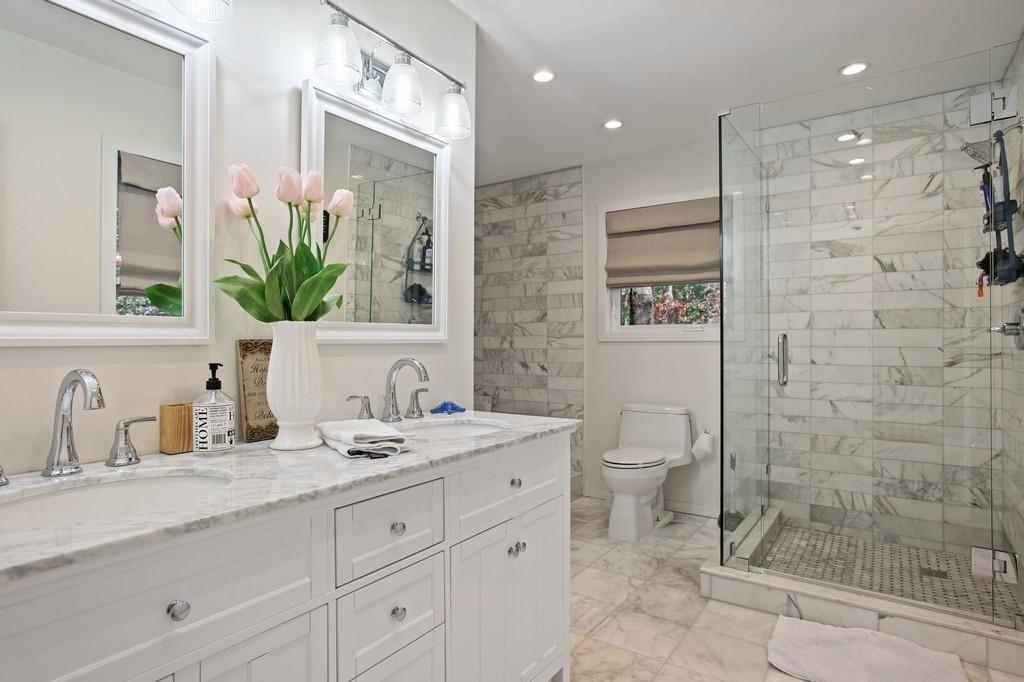 Upscale Tier — Marble & Glass
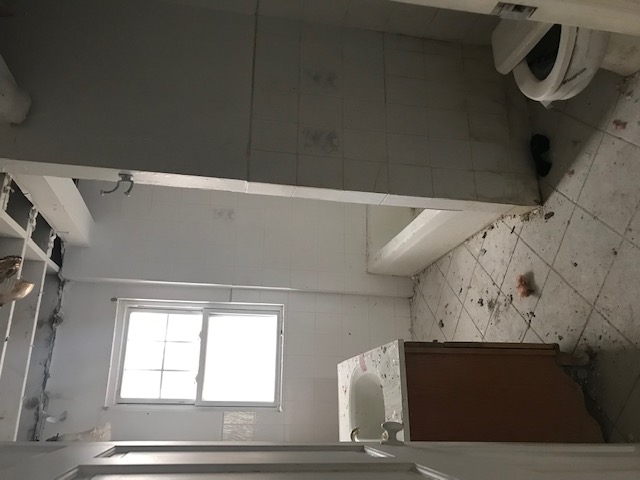 Before — The Starting Point
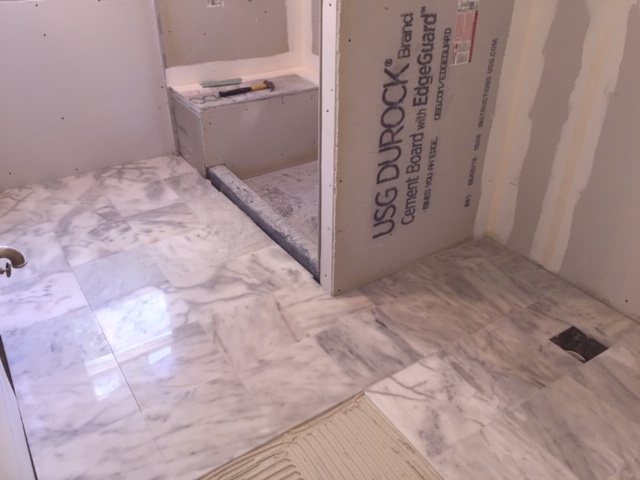 Gut Tier — Down To Studs
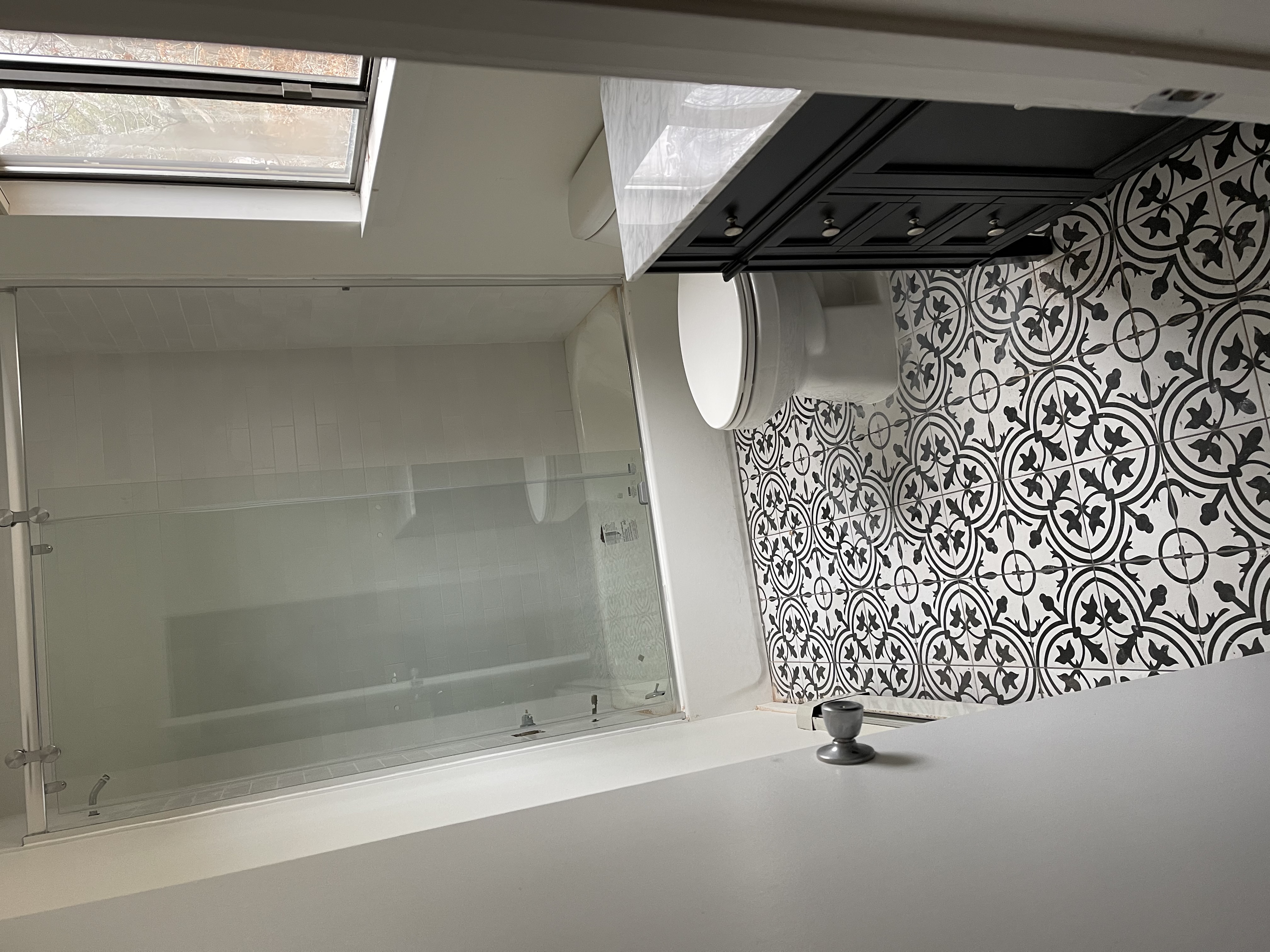 Midrange Tier — Finished